From two to five hives: Florabella grows
Until a few days ago, Florabella was Maria and Maja. Two hives, two colonies, two stories we had followed through spring while learning to read frames, brood, stores, blooms and bee behaviour. From 14 July, they are no longer alone.
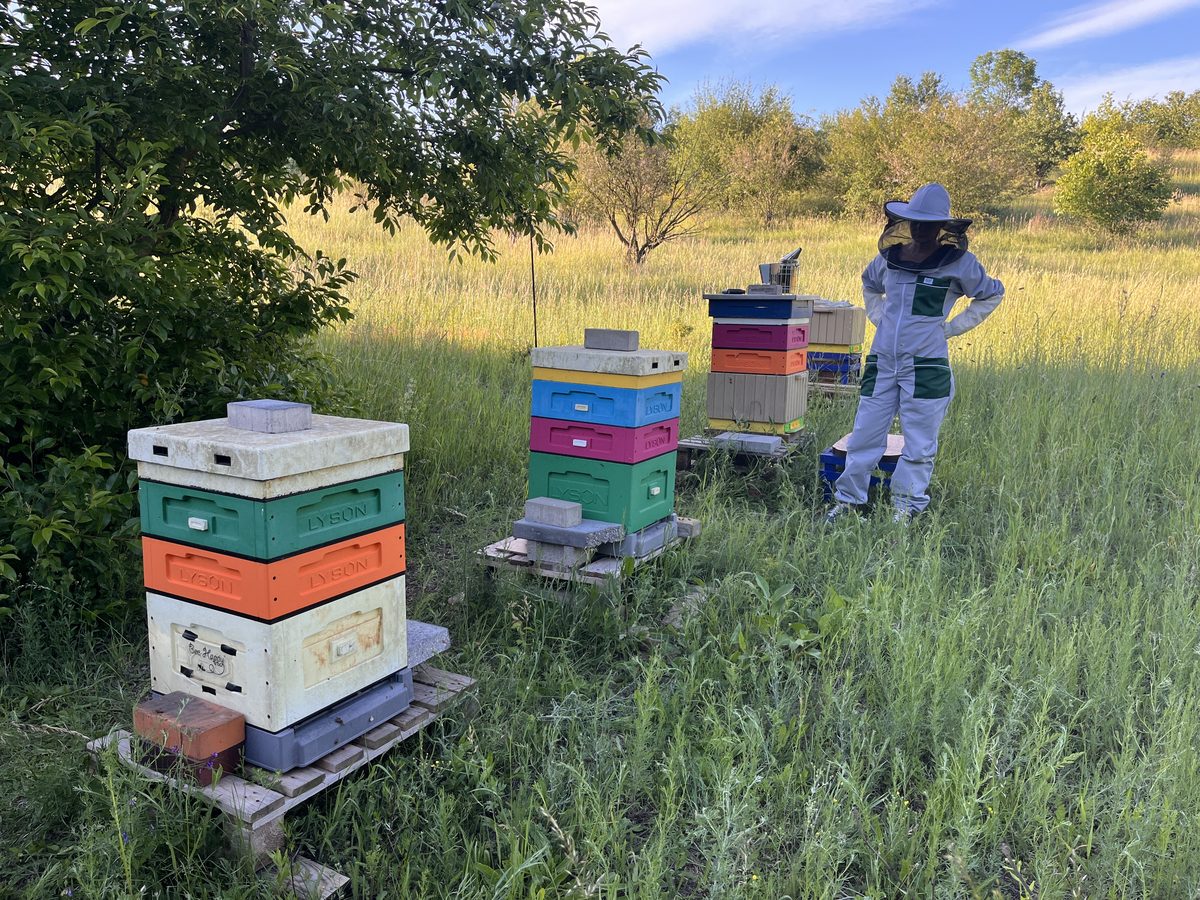
Three new colonies have arrived: Veronica, Anna and Ophelia. Florabella therefore grows from two to five hives. It may sound like a simple change in numbers. For us, it changes almost everything.
Growing is not just adding hives
Five colonies are not simply “two plus three”. Each colony is its own biological system, with its own queen, population and balance — and it can develop very differently from the hive sitting half a metre away.
One colony may expand quickly while the one beside it progresses more slowly. One may build stores more aggressively; another may invest more in brood. A queen may lay in an especially regular pattern, while another colony may simply require closer attention.
With five hives we begin to gain something that was much harder to see with only two: comparison. That does not turn the apiary into a laboratory. It simply helps us understand what is normal, what is occasional and what deserves attention.
Maria and Maja
Maria and Maja were the first. They are the two colonies with which we began this season, and the ones that taught us the most during the first months.
With them we followed spring growth, added supers, watched the main blooms arrive and harvested Florabella's first honey of 2026. Inevitably, they became our reference point.
But there is an obvious limit when you begin with only a few colonies: it is difficult to know whether a behaviour belongs to honey bees in general or simply to that particular colony. With three new hives, that begins to change. Maria and Maja remain the starting point — but now they also become a basis for comparison.
Veronica, Anna and Ophelia
The new hives have three names: Veronica, Anna and Ophelia.
Naming the hives serves no technical purpose. It is simply part of how we decided to build Florabella. A number would be more efficient: Hive 1, Hive 2, Hive 3. But Florabella also comes from the idea that behind every jar of honey there is a concrete story — a place, a season, real colonies and a sequence of decisions made throughout the year.
Giving each hive a name helps us keep that story readable. When we write that Maria developed differently from Veronica, or that Maja built more stores than Anna, we are not trying to humanise the bees. We are building a diary we can follow over time.
Five colonies, five different balances
The first requirement when new colonies arrive is simple: observe.
There is no reason to expect five hives to develop in the same way. Beekeeping contains too many variables: colony strength, the queen's age and quality, amount of brood, availability of nectar and pollen, weather, parasite pressure and even small differences in the position of each hive.
The first inspections therefore establish a baseline. How large is the population? What does the brood pattern look like? How much food is stored? How much space is available? Are there signals that need attention?
They are simple questions, but today's answers become the reference against which we can understand what changes over the coming weeks.
More hives also mean more responsibility
Increasing the number of colonies is relatively easy. Managing them well is the difficult part.
Five hives mean more frames to inspect, more observations to record, more equipment to prepare and a greater chance that one colony will require a different intervention from the others. They also force us to plan more seriously for the less visible part of beekeeping.
Honey is only one part of the year. After the harvest come varroa monitoring and control, evaluation of stores, any necessary feeding and the preparation of colonies for autumn and winter.
In other words, just as Florabella grows, we have to learn not to measure success only in kilograms of honey. A healthy colony that reaches the following spring in good condition matters more than a few extra kilograms harvested in July.
Why five?
There is no industrial growth plan behind it. Florabella remains deliberately small.
Five hives, however, are an interesting scale: large enough to let us observe meaningful differences between colonies, yet still small enough to follow each one individually.
It also gives us room to learn without immediately turning every decision into a production target. For now, our goal is not to produce as much honey as possible. It is to build healthy colonies, understand the territory better and develop a method we can repeat over the years.
The honey will not come from all of them in the same way
Maria and Maja are already in the productive phase of the season. Veronica, Anna and Ophelia are different.
The arrival of three new colonies does not automatically mean tripling production. A new colony first needs to consolidate, build population, organise its stores and prepare for the months ahead. Asking every hive for an immediate harvest would be the wrong way to read this growth.
In the short term, therefore, the five hives have different roles. Some are producing. Others are mainly building their future. And that is exactly as it should be.
A different apiary begins here
Looking at five hives in the apiary today, Florabella already looks very different from only a few months ago. But the most important difference is not visual.
With five colonies we can begin building a more meaningful record: comparing development, stores, seasonal patterns, response to blooms and preparation for winter. The apiary diary will inevitably become more complex.
That is precisely the point.
Maria and Maja allowed us to begin. Veronica, Anna and Ophelia will allow us to understand much more.
From 14 July 2026, Florabella is an apiary of five colonies.